Often yes. Haddonfield's historic preservation district does not block a new dryer vent from exiting through an exterior wall, but the borough treats some additions to a building's outside appearance as a change that needs review before work starts. Haddonfield became the second municipality in New Jersey, after Cape May, to set up a historic preservation district, and the borough still asks for a Certificate of Appropriateness before many exterior changes on properties inside that district. For a dryer vent the question usually comes down to one thing: which wall the cap will sit on, and whether that wall faces the street.
What a Certificate of Appropriateness covers
The Historic Preservation Commission reviews proposed changes to the outside of a property inside the district and issues a Certificate of Appropriateness when a project fits the character of the building and the block around it. A new dryer vent cap, grille or hood mounted on a wall that faces the street, or that sits in plain view from the sidewalk, is the kind of detail the commission looks at, since the review covers anything added to, removed from or altered on a publicly visible elevation. A vent placed on a side or rear wall that does not face the street, screened by a fence, a hedge or the shape of the lot, often draws far less attention, and plenty of those installations move through the standard borough permit process without a separate historic review. The difference comes down to visibility rather than the size of the vent cap itself. For most dryer vent jobs the Historic Preservation Commission handles the review directly, and a larger project that bundles the vent with other exterior work, a new window or an addition, sometimes gets referred to the borough's Planning Board as part of a broader site plan, which is far more common on additions than on a single vent cap.
When the zoning officer is the right call instead
Before assuming a project needs the full commission review, a call to the borough's zoning officer settles the question faster than guessing at it. Some exterior changes fall under a staff-level sign-off rather than a full hearing, especially a small item like a louvered vent cap matching the existing hardware on the house, set on a wall with no street frontage. The zoning officer can also confirm whether a property sits inside the historic district boundary at all, since the district follows specific streets and blocks rather than the whole borough, and a house a few blocks over can carry a Haddonfield mailing address without sitting inside the district lines. Getting that answer before scheduling the work avoids a vent cap installed and then flagged after the fact, which costs more time than the phone call ever would.
Routing the vent to keep the change modest
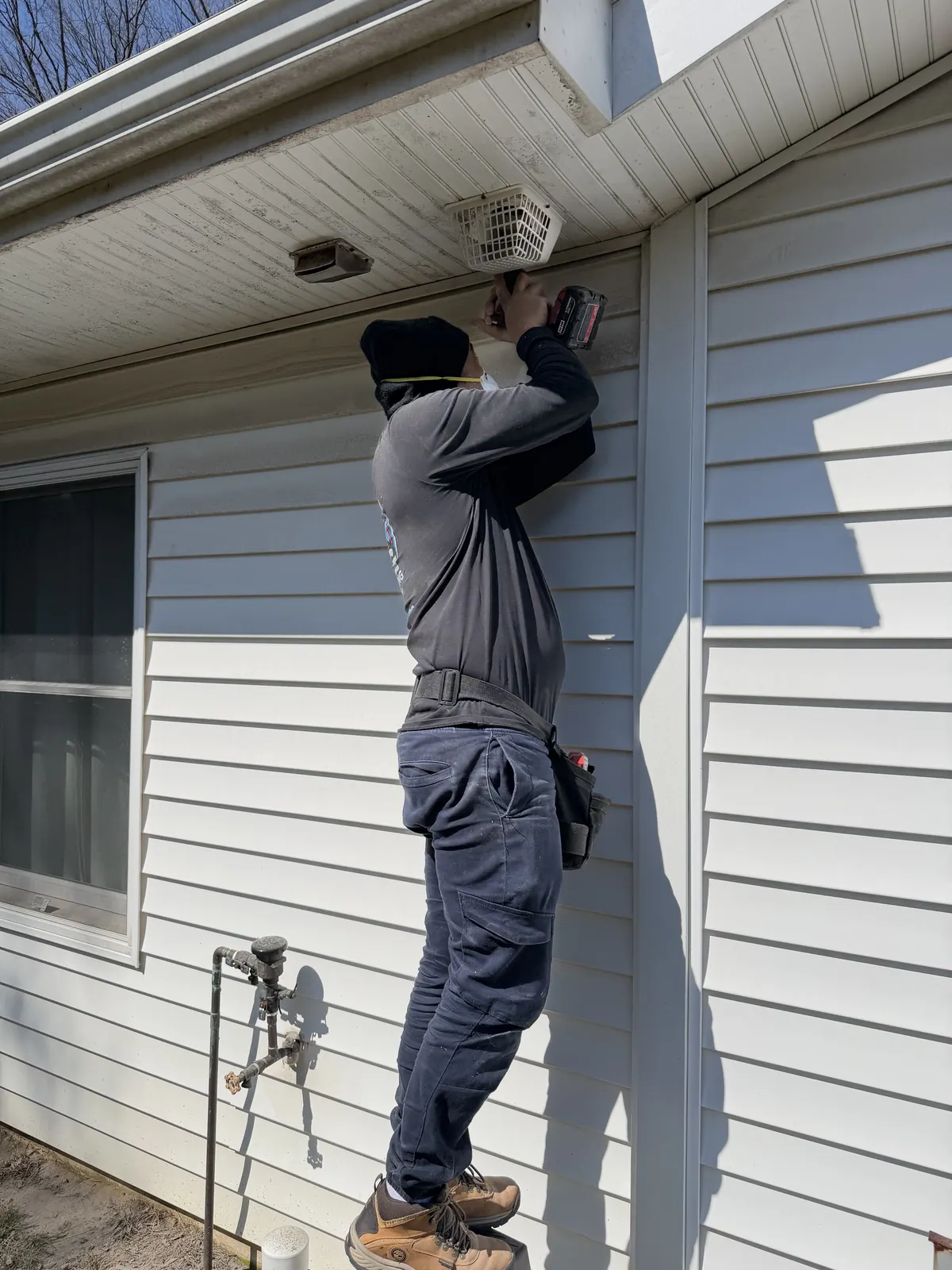
A dryer vent run does not have to exit on the most visible wall just because that wall sits closest to the laundry room. Dryer Vent Installation planned with the historic review in mind usually looks first at a side wall, a rear wall, or a wall facing a driveway or a neighbor's yard rather than the street-facing elevation, since routing the duct a few extra feet through the framing to reach a less visible exterior point is a smaller ask than redoing a vent cap after a commission objects to its placement. Where the laundry sits on an upper floor on the street side of the house, a vertical run up through a closet or a chase to a rear roof penetration sometimes works better than a short horizontal run straight out the front wall, and that kind of routing decision is easier to make before a wall gets opened than after the duct is already in place.
What counts as an exterior change and what does not
Not every dryer vent job touches the outside of the house in a way the commission cares about. Replacing a vent cap with a matching style and size in the same spot it already occupies counts as a repair to existing hardware rather than a new exterior feature, and that distinction matters for whether a Certificate of Appropriateness applies at all. A first-time installation, a vent moved to a different wall, or a vent upsized to a larger hood adds something to the building's exterior that was not there before, and that is the category the review process is built around. A homeowner unsure which side of that line a project falls on does better asking the zoning officer directly than guessing, since the cost of asking is a phone call and the cost of guessing wrong is a vent cap that has to come back off the wall.
Cleaning an existing vent changes nothing outside
Dryer Vent Cleaning does not touch the exterior of the house at all. The work happens inside the duct run, from the dryer connection through to the termination point, and a vent that already has an approved cap in place keeps that same cap through a cleaning visit. The only time a cleaning visit turns into an exterior question is when the technician finds the existing cap damaged, missing its flapper, or blocked by a bird or rodent nest built inside a termination that was never screened properly, and replacing that hardware in kind, same spot, same style, stays at the repair level rather than becoming a new exterior change. A chimney on the same house raises a similar distinction. Chimney Repair work like a cap replacement or crown repair on a masonry chimney inside the historic district follows its own review path, and a homeowner planning both a dryer vent project and chimney work in the same stretch is better off raising each one separately with the borough rather than assuming one approval covers both.
What a written estimate should cover
A written estimate for Dryer Vent Installation on a property inside Haddonfield's historic district should spell out where the vent is proposed to exit, since that location is what decides whether a Certificate of Appropriateness becomes part of the timeline. A technician who has worked other jobs in Haddonfield, Collingswood or Haddon Heights knows to ask about wall placement before quoting the route, and a homeowner who already has a sense of which wall the borough is likely to flag can pass that along before the crew shows up. None of this changes what the vent itself has to do once installed, a clear path to the outside with a cap that closes against backdraft and keeps pests out, the same requirement that applies to a dryer vent on any house in Camden County whether or not a historic commission has a say in where it sits.